
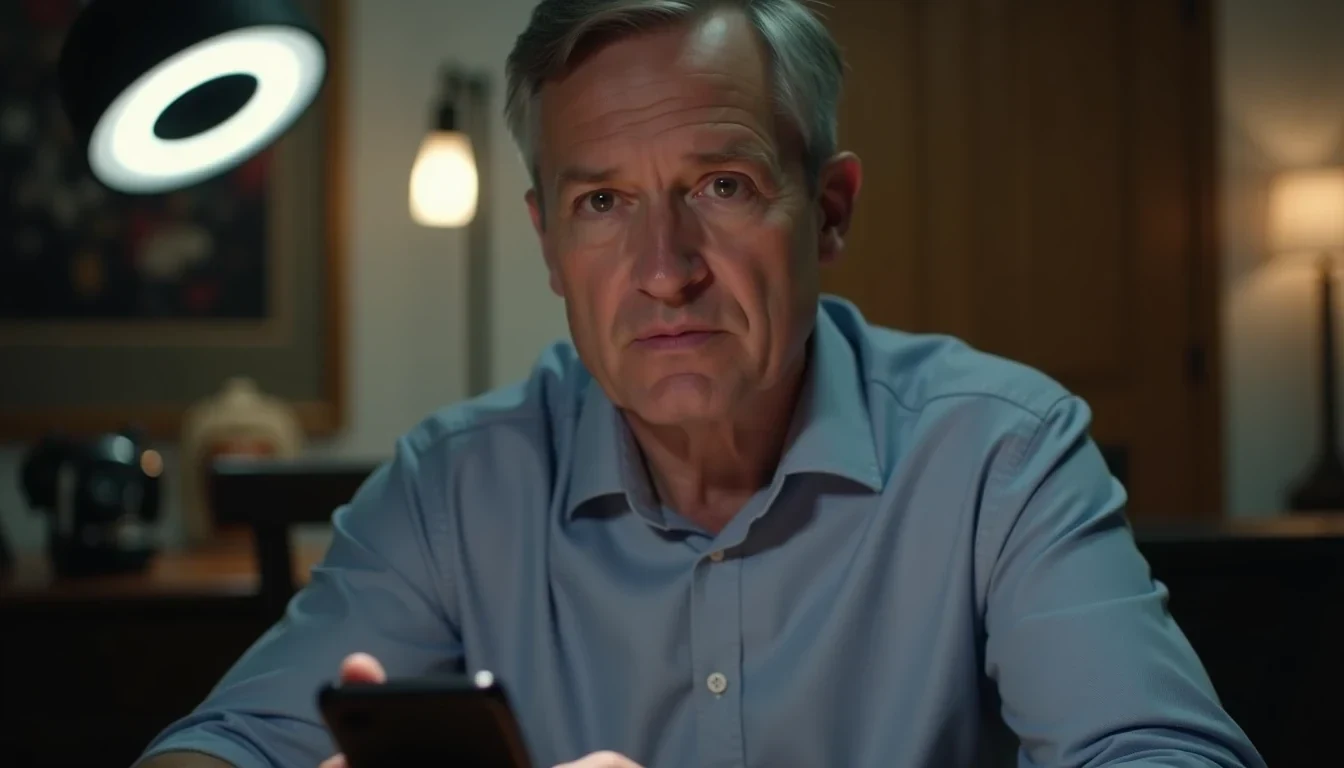
A politician in a studio used to need a camera crew, a producer, and a network executive willing to clear the slot. Now they need a phone and a ring light. The distance between holding office and becoming a broadcaster has collapsed to the width of a charging cable. Everyone involved still pretends this is a temporary disruption rather than a permanent renegotiation of who gets to speak and who must listen.
The creator economy has relocated the gate of political communication. Where newspaper editors and television producers once decided which stories reached the public, algorithms and audience loyalty now perform that function for figures who often reject the label of journalist while performing the work of one. During the January 6, 2021 attack on the United States Capitol, individuals with phones and platform accounts transmitted live footage that reached millions before any network could assemble a correspondent. The footage was raw, unverified, and frequently stripped of context. It was also immediate, unfiltered, and positioned as more authentic precisely because it lacked institutional packaging. The central tension is this: the same absence of editorial process that makes creator content feel honest also makes it structurally vulnerable to the very failures that journalism’s slow, expensive verification systems were built to catch.
The Personality Premium
Traditional journalism operates through an institutional voice that deliberately suppresses individual character. The creator economy inverts this. Figures like Hasan Piker built substantial audiences on Twitch by offering real-time political commentary delivered with visible irritation, amusement, or urgency. Krystal Ball and Saagar Enjeti left conventional cable employment to construct “Breaking Points” as a subscriber-funded operation where their specific chemistry and their particular skepticism toward mainstream consensus became the product itself. The appeal is not merely ideological alignment but relational continuity. Audiences return to these voices for the same reason they return to podcast hosts or newsletter writers: the simulation of sustained personal acquaintance.
This relational model carries genuine advantages for political comprehension. Alexandria Ocasio-Cortez has used Instagram Live and TikTok to explain policy mechanisms, respond to constituent questions, and display the mundane textures of legislative work. The format reaches demographics that do not consume traditional news, and the direct address avoids the compression and distortion of interview transcription. When a politician controls the camera, no editor can trim the answer to fit a predetermined narrative. The same dynamic, of course, means no editor can challenge the evasion, correct the misstatement, or insist on the follow-up.
The Verification Gap
Journalism developed its institutional forms in part as a response to recognizable failures. Libel law, correction protocols, ombudsmen, and editorial standards emerged from specific scandals and specific abuses. These mechanisms are imperfect, frequently honored in the breach, and entangled with commercial pressures that compromise their function. They nonetheless create friction. A newspaper that publishes a false claim faces potential legal exposure, measurable reputational damage, and internal career consequences. An independent creator who amplifies misinformation faces, at most, platform enforcement that is inconsistent, delayed, and easily circumvented.
The COVID-19 pandemic illustrated this asymmetry with painful clarity. Numerous online figures disseminated unverified claims about vaccine safety, treatment efficacy, and pandemic origins. These claims spread through algorithmic recommendation systems designed to maximize engagement rather than accuracy. Traditional outlets were not immune to error, but they operated within systems that at least theoretically required correction and retraction. The creator economy’s speed and personality operate without this theoretical brake. The result is not merely more misinformation but a structural devaluation of the very concept of verification. When every source presents with equal confidence, the distinction between reported and invented becomes a matter of audience preference rather than epistemic procedure.
Politicians as Their Own Medium
The adaptation has not been one-directional. Political figures have increasingly internalized the logic of creator platforms, treating them not as supplementary channels but as primary media properties. Donald Trump’s use of Truth Social after his suspension from mainstream platforms represented not exile but intensification of a direct-to-audience strategy he had pursued since 2015. Joe Biden’s campaign engaged TikTok influencers for vaccine promotion, recognizing that message delivery through trusted personal brands could outperform official communication. The podcast circuit, particularly programs like “The Joe Rogan Experience,” has become a standard stop for political figures seeking the credibility that attaches to long-form, minimally edited conversation.
This shift is frequently described as democratization, as if the removal of institutional intermediaries necessarily empowers audiences. The description obscures more than it reveals. Politicians who control their own channels control their own framing, question selection, and temporal rhythm. The press conference, for all its theatrical dysfunction, at least forced confrontation with adversarial inquiry. The Instagram Live session does not. The creator economy offers politicians not liberation from media distortion but liberation from media accountability.
Alternative or Amplifier?
The fundamental question is whether this arrangement constitutes a genuine alternative to traditional political communication or merely a more efficient delivery mechanism for established strategies. Elements of both are visible. Independent journalists operating through Substack or Patreon have produced investigative work that challenged mainstream narratives and faced institutional resistance. Glenn Greenwald’s reporting on Brazilian political interference and Matt Taibbi’s examination of Twitter’s internal communications represent journalism that would have struggled to find accommodation within conventional outlets. The financial model of direct audience subscription theoretically insulates such work from corporate or political pressure, though it replaces one dependency with another: the need to maintain subscriber engagement through consistent output and predictable perspective.
More commonly, the creator economy functions as a personalized distribution channel for partisan narratives that originate elsewhere. Algorithmic amplification does not reward complexity or contradiction. It rewards emotional intensity, tribal identification, and the simulation of insider knowledge. The result is less a pluralistic information space than a collection of parallel spaces, each internally coherent and mutually incomprehensible. The Black Lives Matter protests of 2020 demonstrated this bifurcation: user-generated content from participants offered ground-level documentation that challenged initial mainstream framing, but it also circulated through filter bubbles that prevented cross-audience exposure. Alternative media, in practice, often means alternative to someone else’s media, not alternative to the logic of media itself.
The creator economy has undeniably redistributed capacity. Individuals without institutional backing can now reach audiences that once required massive capital investment. This redistribution, however, has not been accompanied by a redistribution of accountability. The verification systems that journalism developed remain available to those who can afford them, while those who cannot present their work with equivalent rhetorical confidence. The political power of accidental media creators is real and growing. Whether it represents a transformation of democratic communication or simply its fragmentation into smaller, more intimate echo chambers remains the open question that no algorithm is designed to answer.